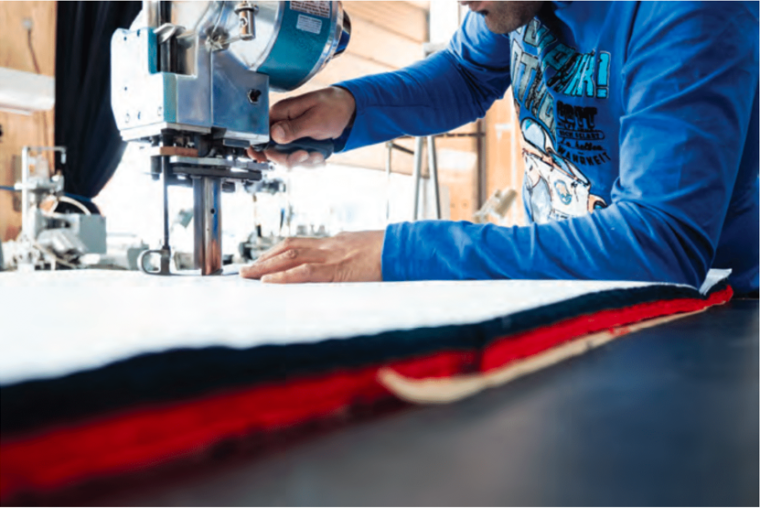
The production process is the most complex in the life-cycle of textile products and garments. The whole process involves taking raw material and spinning in to yarn, dyeing and weaving, cutting and sewing. Depending on both raw material and end-result; the road from field or forest to warehouse is almost dizzying. Water, chemicals, energy and labor are major issues. Here is an over-view of some of the different concerns a designer or company should address.
One trillion gallons of water a year is used to process the 56 billion pounds of cotton used annually along with 33 trillion gallons of oil and 20 billion pounds of chemicals. 85% of the water, 80% of the energy and 65% of the chemicals are tied to dyeing and finishing processes... Cotton, which is composed primarily of cellulose, is difficult to dye compared to the protein fibres such as wool and silk. Dying one pound of cotton uses 100 gallons of water, costs 50 cents for water, power and dye and two dollars for toxic cleanup. Parts of the world without regulations dump vast quantities of toxic waste into waterways. While mills in the US, Europe and Japan are spending two dollars pr pound to clean up dye waste, their competitors in India, China, Indonesia and elsewhere are allowed to export their goods into these countries without spending the money to clean up the waste.
Up until 1856 all textiles were dyed with natural dyes
Before the wool can be used for commercial purposes, it must be scoured, or cleaned. Scouring may be as simple as a bath in warm water, or as complicated as an industrial process using detergent and alkali, and specialized equipment. In commercial wool, vegetable matter is often removed by chemical carbonization.
The waste water from the washing process contains large amounts of grease which, when discharged into the wastewater, is favourable to the growth of algae which may cause oxygen depletion and kill off fish.
One of the most troublesome current areas of concern in the textile industry is the pollution brought about by the coloration processes of dyeing and printing. The main problem is that the compounds used for applying color are almost always highly toxic, carcinogenic or both.
Up until 1856 all textiles were dyed with natural dyes. Natural dyes are usually derived from plants and the amount produced is tiny, requiring huge areas of land to produce small quantities at high cost. It has been calculated that even if two thirds of the world's agricultural land was used to grow natural dyes there would be scarcely enough to dye the current volume of textiles. Most synthetic dyes are based on raw materials that are derived from petroleum and this issue remains, even though dyes have become much safer than in previous generations. There is still an under-class of dye manufacturers who continue to make cheap, nasty, synthetic dyes that do cause serious health risks to the environment, workers and to a lesser extent, consumers. No one color can be singled out as having the best or the worst environmental load, although certain shades – blue, green and turquoise – are difficult to achieve without the use of copper – a heavy metal. Chrome-dyes have generally been used to attain dark shades like black and navy in wool dyeing, and have been used because of their high standard of fastness and low prices. But the risks associated with chrome dyes have resulted in many leading EU retailers banning them.
The polyester-industry/synthetics have worked hard to clean up their act and come up with new solutions, but they have a harder time getting attention, since their “sex appeal” doesn’t quite match the organic movement.
Using EcoMetrics, here is a general overview giving a t-shirt made from different fibers an Environmental Damage Unit score.
High numbers are bad, lower are better:
Conventional Cotton 34 EDU
Organic Cotton 28 EDU
Lyocell 28 EDU
Wool 24 EDU
Polyester 25 EDU
Cold Dyed Cotton 28 EDU
Hemp 27 EDU
Dope Dyed Polyester 19 EDU